Scrap Metal Sculptures
Scrap sculpture builds monumental work out of discarded metal — chain, pipe, gears, tools, vehicle parts. The material is the message, which is why municipal waste-to-wonder parks and sustainability programmes commission it: the piece is a landmark and an argument about what waste is worth, at the same time.
Why public bodies commission it
A waste-to-wonder installation earns its budget several times over. It is a public artwork, a visible sustainability statement, a destination that generates footfall and photographs, and a demonstration of waste policy in a form the public actually engages with.
It is also unusual in public art for being cheap in materials and expensive only in skill, which tends to sit well with procurement.
How it is built
Nothing here is cast. Scrap is sorted, an engineered steel frame is built, then components are cut, formed and welded onto the armature until the found objects resolve into a coherent form.
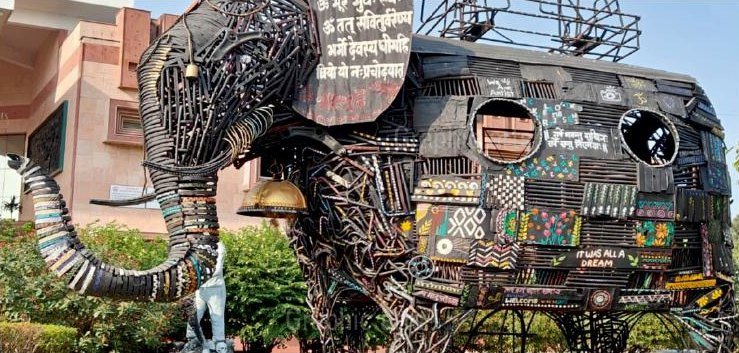
The craft is in the double reading. Up close a viewer sees chain, gears and pipe; at twenty metres they see an elephant. Either half alone is easy — making both true at once is the whole discipline.
Safety is part of the deliverable
These pieces live unsupervised in public parks and children will climb on them. Every exposed edge at reachable height is ground back and dressed, cavities are sealed so water cannot pool, and the piece is anchored to a proper foundation engineered for wind loading and for people.
Materials
- Reclaimed chain, cable and rodFlowing lines and surface texture
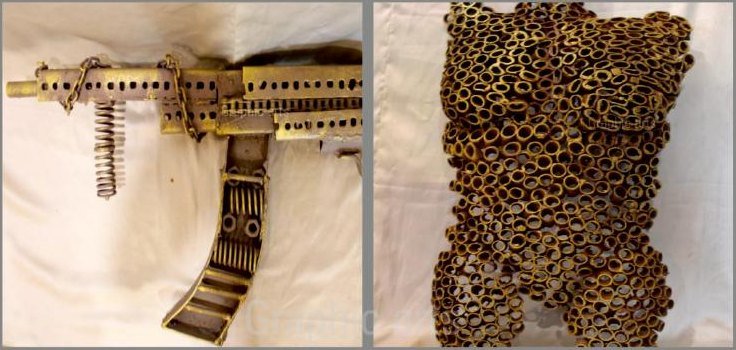
- Pipe and tube sectionsRepeated modular texture and volume
- Gears, sprockets and toolsClose-range detail and visual interest
- Sheet and plateMass and broad continuous surfaces
- Vehicle and machine componentsRecognisable, narrative elements
- Structural mild steelThe internal frame everything is welded to
Applications
- Waste-to-wonder and sustainability parks
- Municipal gardens and public plazas
- CSR and ESG installations for corporate campuses
- Swachh Bharat and civic awareness programmes
- Entrance landmarks for institutions
Selected work
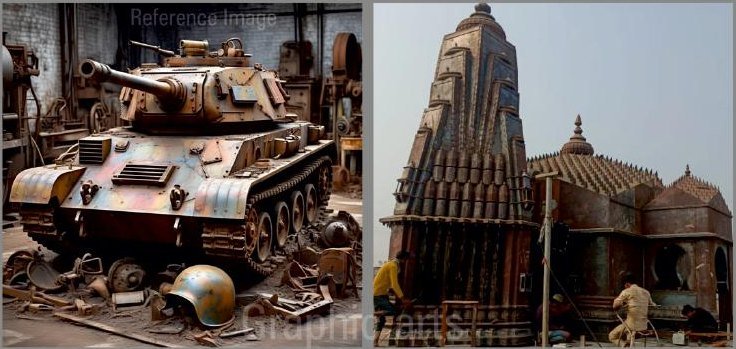
How the work is delivered
- Agree the form and site first — the design should decide what scrap is collected, not the other way round.
- Source and sort material, from your yards or ours.
- Engineer and build the internal steel frame.
- Cut, form and weld components onto the armature, working from the silhouette inward.
- Grind back every reachable edge, seal cavities, treat structural members against corrosion.
- Clear-seal the surface, or leave it to patinate as part of the aesthetic.
- Foundation, anchoring and installation on site.
Frequently asked questions
Which company can make a scrap metal sculpture for a municipal park?
Graphic Arts in Varanasi builds monumental scrap material sculpture for municipal and public sites, working either from scrap supplied by the corporation or from material we source. We are a GST-registered advertising agency operating since 1999 — the classification through which most municipal beautification work is tendered in Uttar Pradesh.
Can we supply our own scrap from municipal yards?
Yes, and it is often the better route — it strengthens the sustainability story and reduces cost. Involve us before collection begins so the material gathered actually suits the intended form; short rigid components cannot make long flowing curves.
How long does a scrap sculpture last outdoors?
Indefinitely with basic care. The structural frame is treated against corrosion, and the scrap surface is either clear-sealed or allowed to weather as part of the look. Annual inspection of welds and fixings is the only real requirement.
Is it safe in a public park?
Yes, when detailed for it — which we treat as part of the job rather than a finishing touch. Edges ground back at reachable height, no gaps that can trap a hand or foot, cavities sealed against standing water, and foundation anchoring engineered for wind and for climbing.
Start a project
Tell us the site, the scale and the date it needs to be in place. We will tell you what is achievable and what it involves.