
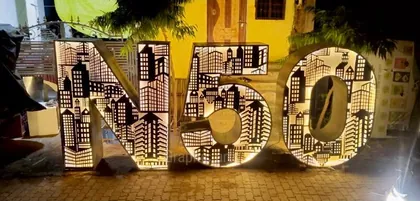
Cement Murals
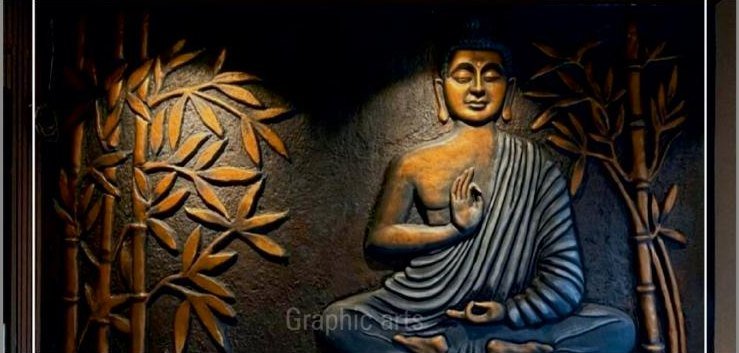
Cement murals are carved by hand directly onto the wall. Mortar is built up in layers and modelled while still workable, so the finished relief is monolithic with the wall itself — nothing is fixed on, nothing can come loose, and the piece is made specifically for the wall it lives on.
Carved in place, not cast and fitted
This is the oldest technique we practise and it is genuinely different from casting. A mortar bed is applied to the prepared wall, then the artist models the composition into it by hand — building up, cutting back, refining — while the material is still open. The relief cures as part of the wall.
The consequence is permanence. There is no panel, no joint, no fixing to fail. A cement mural is as durable as the masonry behind it.
The look
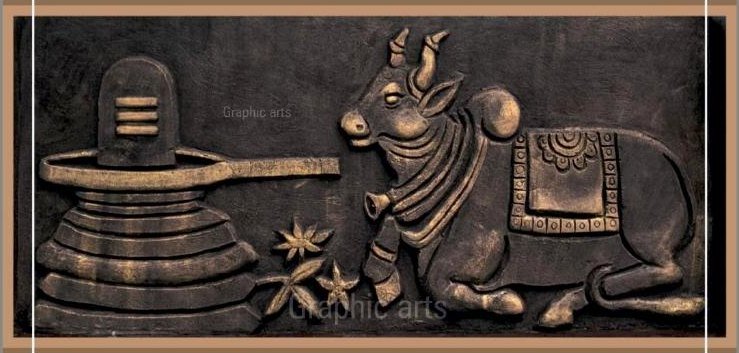
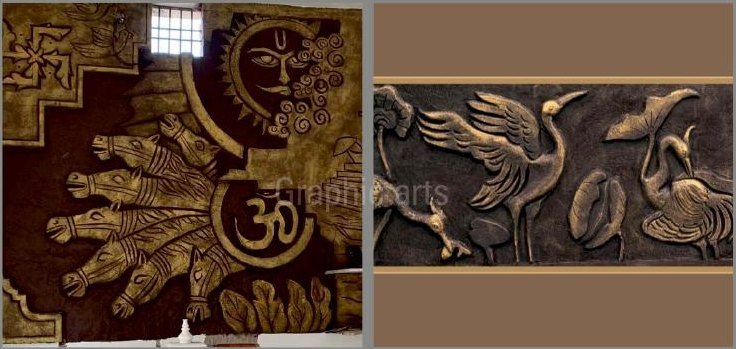
Cement relief has a weight and a matte, mineral surface that cast panels do not replicate. Finished in antique bronze or metallic tones over the modelled surface, it reads as aged, carved and substantial.
What to know before commissioning
Because the work is made in place, it needs site access for the full working period and the wall must be sound and properly prepared. It also cannot be moved later — that is the trade-off for its permanence. If a piece may need to relocate, a cast fiber mural is the better choice.
Materials
- Cement mortarApplied and modelled in situ while workable
- Prepared masonry substrateThe wall itself becomes part of the work
- Metallic and bronze finishesApplied over the modelled surface
- Mineral pigmentsWhere restrained colour is wanted
- Protective sealerFor exterior and high-touch locations
Applications
- Temple walls, courtyards and precincts
- Hotel and restaurant feature walls
- Residential entrance and courtyard walls
- Institutional and campus boundary walls
- Exterior walls where permanence matters most
Selected work
How the work is delivered
- Survey the wall — soundness, damp, and the surface preparation needed.
- Composition designed around the specific wall, its openings and surround.
- Surface preparation and keying of the substrate.
- Mortar applied in layers and modelled by hand while workable.
- Refinement — building up and cutting back as the material sets.
- Curing, then finishing in bronze, metallic or natural tone.
- Sealing where the location requires it.
Frequently asked questions
Is a cement mural made in the studio or on site?
On site, always. The mortar is applied to your wall and modelled in place while workable, so the relief becomes part of the wall structure. That is what distinguishes it from a cast panel made in the studio and fixed on afterwards.
Can a cement mural be done on an exterior wall?
Yes — it is one of the most durable options for exterior relief, since there is no panel or fixing to fail. The wall needs to be structurally sound and correctly prepared first, and that preparation is what determines how long the work lasts.
Which is better for my project, cement or fiber?
Cement for permanence, weight of appearance, and exterior walls that will never change. Fiber for interiors, for speed, for lightweight fixing, and when the piece might need to move. Our material comparison guide sets out the full trade-off.
Start a project
Tell us the site, the scale and the date it needs to be in place. We will tell you what is achievable and what it involves.